 Image 1 of 1
Scattering from Electronic Audio Experiments is a stereo reverb designed around a complex multi-tap delay network that offers an unorthodox and fresh perspective on spatial effects. The pedal began as a spiritual successor to EAE's own Hypersleep analog reverb, which was based on the long lost MN3011 BBD chip—the chip that inspired the company to explore reverb in the first place, and whose exhausted supply doomed the pedal from the get go. Fortunately, the popular Spin FV-1 IC offered another way in, its architecture lending itself well to the type of behavior the obsolete BBD chip offered. Enter Scattering—a bold reverb that reaches where Hypersleep only dreamt of.
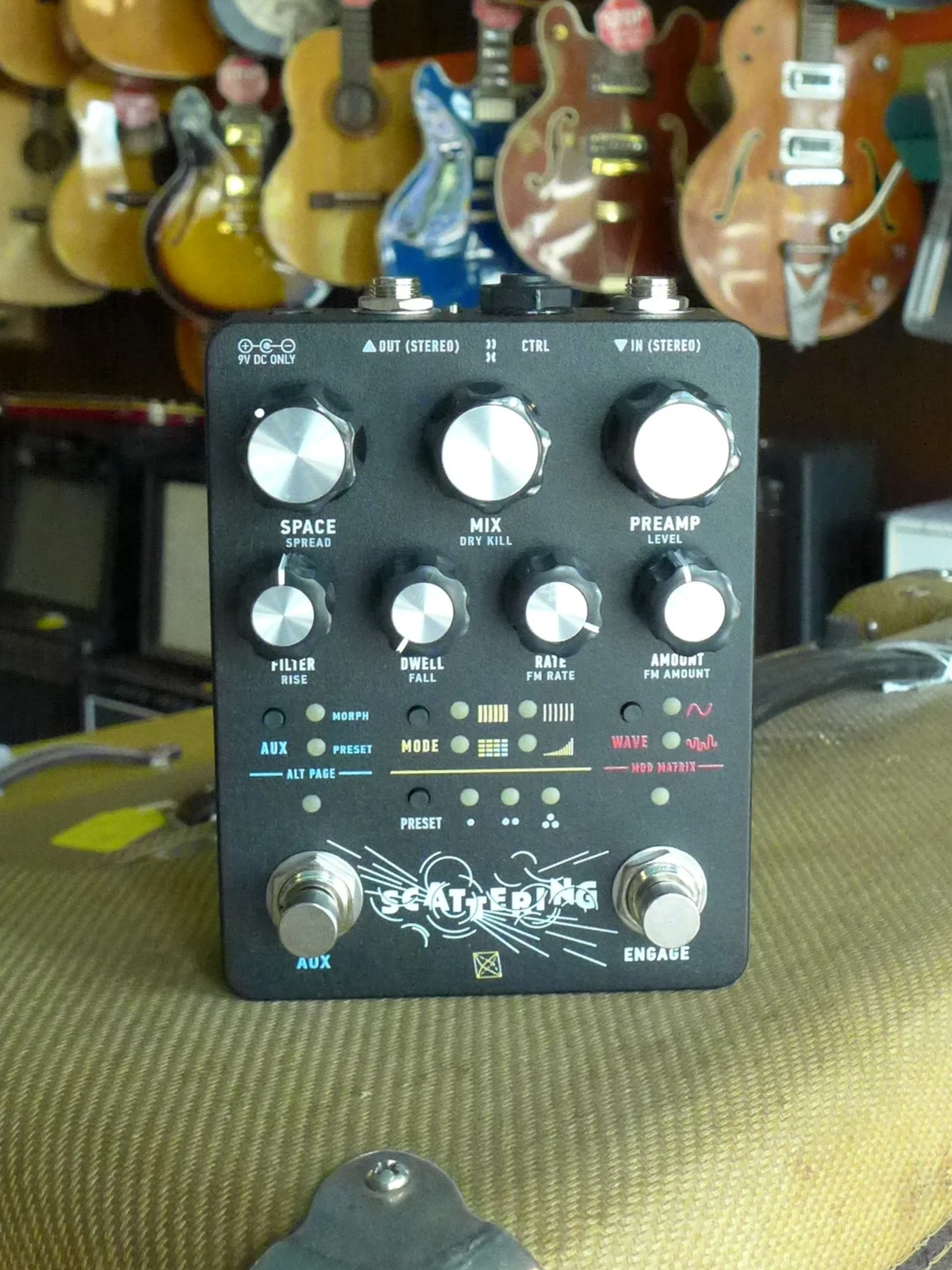
The pedal's seven controls spread across two rows shape the effect. The top three include Space for setting individual delay tap length, Mix for blending the signal against the reverb output, and Preamp that drives both the wet and dry paths before the effect. The lower four controls are Filter for the cutoff of the analog low-pass applied to the reverb output, spanning full range, Dwell for feedback, and LFO Rate and Amount for bringing in modulation.
The pedal can be set to operate in one of four modes aka reverb algorithms, each offering a radically different sonic space. The first mode, X1, ports the six tap lengths directly from the MN3011 BBD settings. X2 doubles these lengths, moving the pedal further into long delay territory. The third algorithm is Matrix, which runs eight delay lines, four per side, through an FDN matrix, stable enough to hold an infinite reverb. The last is Nonlinear, characterized by a swelling envelope reading through the delay taps. A comprehensive LFO with selectable waveform animates each algorithm in a unique way, from sluggishly slow tape wobble to audio-rate FM cacophony.
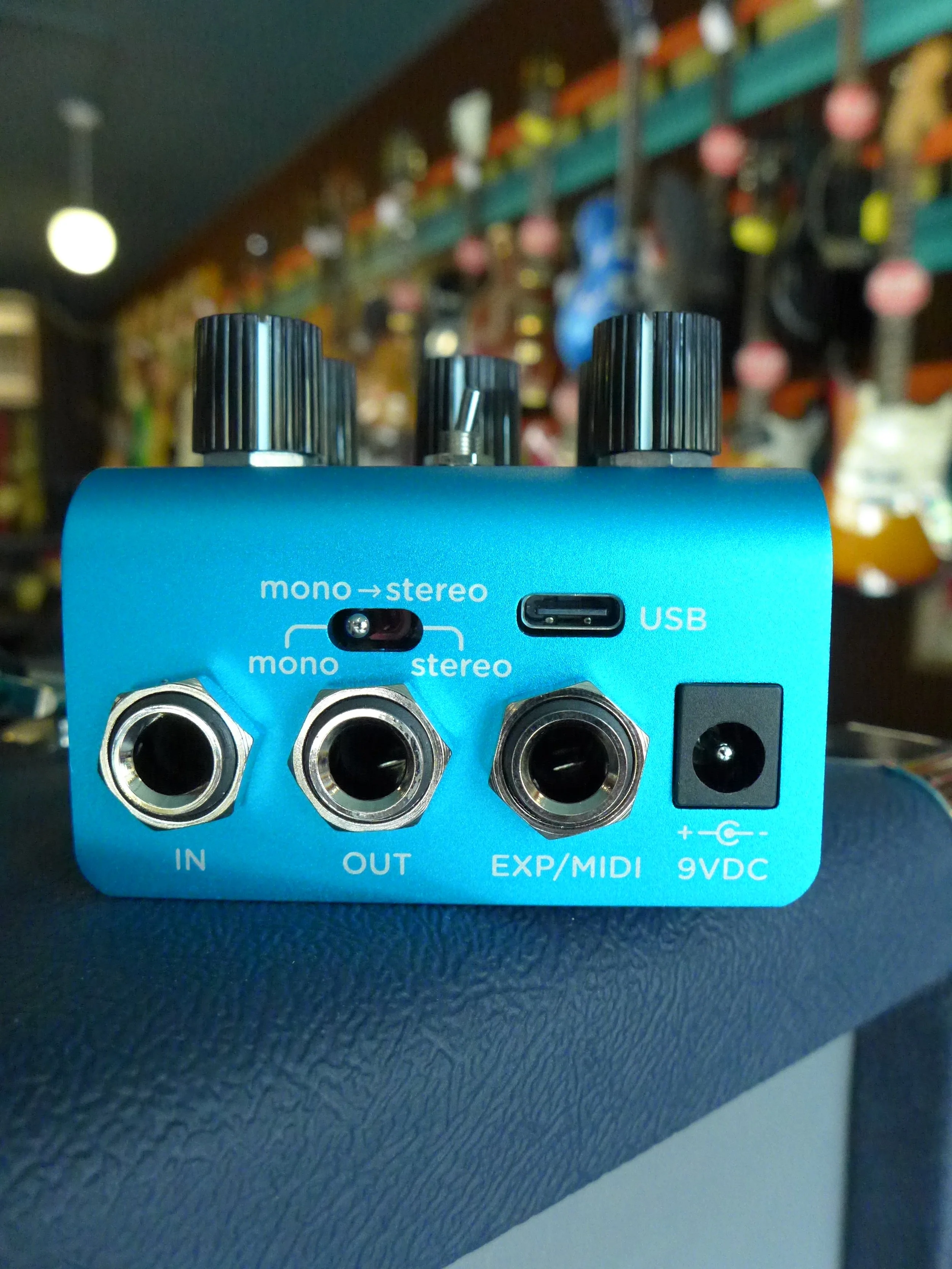
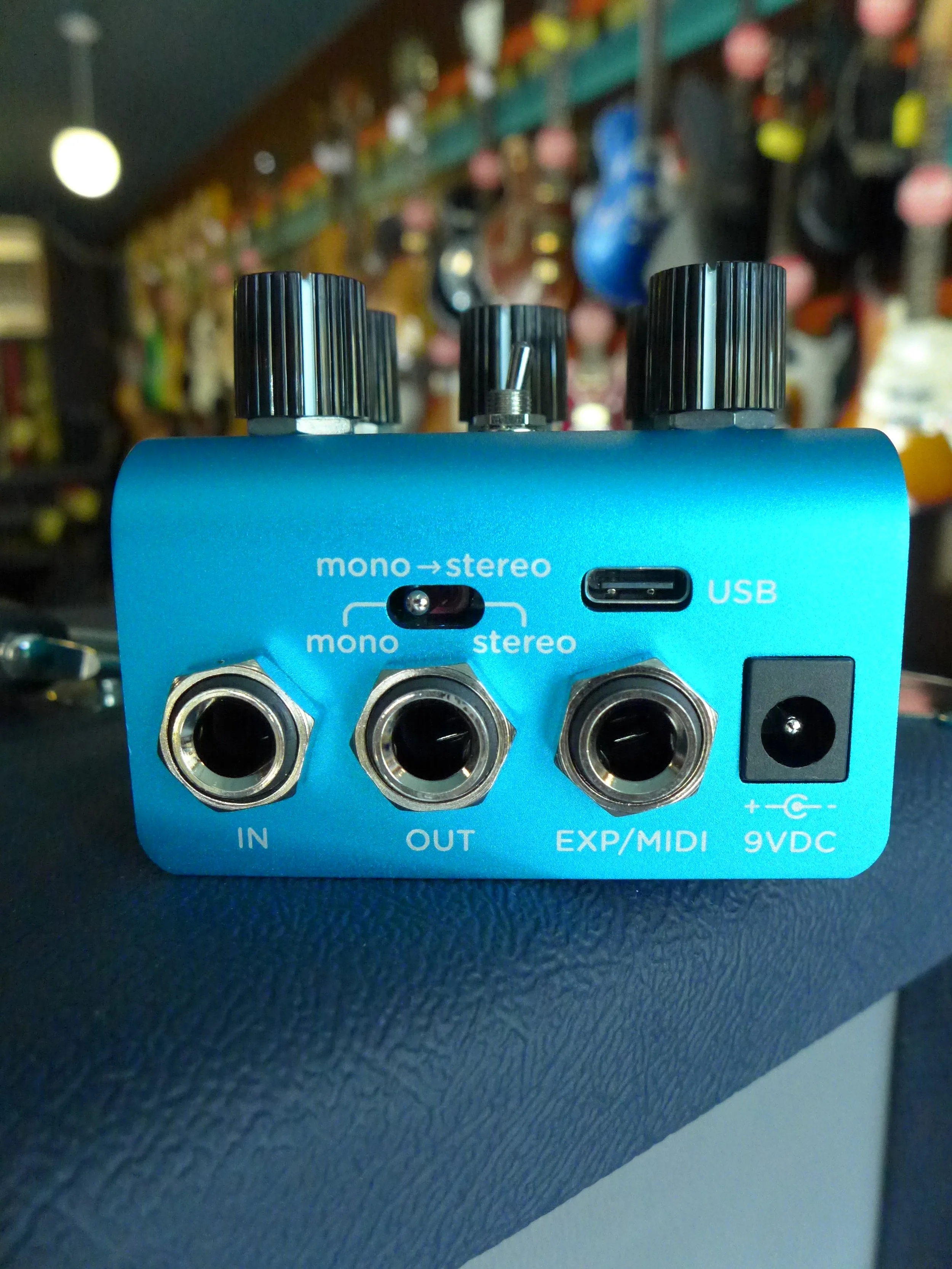
As is customary with EAE devices, a great deal of care has gone into making the pedal a joy to perform with: sixteen preset slots, full MIDI implementation, a mod matrix with attenuverters for assigning the LFO, morphing between two complete control states with adjustable rise and fall, and a customizable Aux footswitch. A Spread control varies the stereo image from dual mono to ping-pong flurries, and a MISO (mono in, stereo out) toggle feeds a mono source into both channels for widening. Characterful and versatile, Scattering is an analog-digital hybrid that can recede into a subtle slapback or room tone as easily as it delivers wild glitched-up flutter, imaginary darklands, disintegrating voids, and everything in between.
Scattering from Electronic Audio Experiments is a stereo reverb designed around a complex multi-tap delay network that offers an unorthodox and fresh perspective on spatial effects. The pedal began as a spiritual successor to EAE's own Hypersleep analog reverb, which was based on the long lost MN3011 BBD chip—the chip that inspired the company to explore reverb in the first place, and whose exhausted supply doomed the pedal from the get go. Fortunately, the popular Spin FV-1 IC offered another way in, its architecture lending itself well to the type of behavior the obsolete BBD chip offered. Enter Scattering—a bold reverb that reaches where Hypersleep only dreamt of.
The pedal's seven controls spread across two rows shape the effect. The top three include Space for setting individual delay tap length, Mix for blending the signal against the reverb output, and Preamp that drives both the wet and dry paths before the effect. The lower four controls are Filter for the cutoff of the analog low-pass applied to the reverb output, spanning full range, Dwell for feedback, and LFO Rate and Amount for bringing in modulation.
The pedal can be set to operate in one of four modes aka reverb algorithms, each offering a radically different sonic space. The first mode, X1, ports the six tap lengths directly from the MN3011 BBD settings. X2 doubles these lengths, moving the pedal further into long delay territory. The third algorithm is Matrix, which runs eight delay lines, four per side, through an FDN matrix, stable enough to hold an infinite reverb. The last is Nonlinear, characterized by a swelling envelope reading through the delay taps. A comprehensive LFO with selectable waveform animates each algorithm in a unique way, from sluggishly slow tape wobble to audio-rate FM cacophony.
As is customary with EAE devices, a great deal of care has gone into making the pedal a joy to perform with: sixteen preset slots, full MIDI implementation, a mod matrix with attenuverters for assigning the LFO, morphing between two complete control states with adjustable rise and fall, and a customizable Aux footswitch. A Spread control varies the stereo image from dual mono to ping-pong flurries, and a MISO (mono in, stereo out) toggle feeds a mono source into both channels for widening. Characterful and versatile, Scattering is an analog-digital hybrid that can recede into a subtle slapback or room tone as easily as it delivers wild glitched-up flutter, imaginary darklands, disintegrating voids, and everything in between.